

Many companies... have a bureaucratic framework and a culture that stifles employees’ ability to contribute. To overcome this tendency, we strive for a bottom-up approach that empowers our employees.
Charles and Chase Koch
Becoming a Principle Driven Leader, page 94
Why Is This Important?

Koch’s success depends on empowered employees who apply Principles of Human Progress. One of the primary ways we empower our employees is by being principle-based instead of rule-based. This approach encourages individuals to have a sense of ownership for their work and frees everyone to think, innovate and develop different methods and solutions rather than mindlessly follow instructions.
Empowerment includes individuals having a contribution mindset, some level of control or autonomy over their work, support from others and accountability for results.
- Support includes helping employees overcome internal barriers and removing external barriers. It encourages people to ask for help when needed and offer it when appropriate. Lack of support can lead to unproductive failure, stalled progress, and a feeling of helplessness.
- Accountability includes tying recognition to contribution. When we reward genuine achievement, we signal true potential and foster earned success — which is empowering. Lack of accountability can lead to a sense of entitlement, mismanagement of resources, and misguided efforts.
Principles in Brief
As Abraham Maslow taught: “Every person is, in part, his own project and makes himself.” When individuals believe they have a gift that can be developed and are free to determine and control their own lives, they are empowered to contribute, make a difference, and realize their potential. Empowerment is facilitated by a contribution mindset and a supportive, inclusive environment. It is hindered by barriers — both internal and external to the individual.
Internal barriers include doubts and limiting beliefs. If someone feels incapable of contributing or afraid of making mistakes, they will fail to become all that they can be. Internal barriers can cause someone to give up before they start. While few begin with everything in their favor, everyone has a gift that, if cultivated, can improve their circumstances. Individuals who believe in themselves — who realize they have something to offer — have discovered their unique gift and are more motivated to develop valued skills and contribute. They are more likely to develop an accurate sense of self-worth, realize what they are capable of becoming (self-actualize), and live a life of meaning.
External barriers exist when the key institutions of society — education, business, communities, and government — hinder or impede an individual’s journey of realizing their potential. Removing all such barriers is essential. People become empowered when they are enabled to discover, develop, and apply their gifts; communities provide the support they need; businesses empower employees to succeed by contributing to the betterment of others; and governments protect the rights of every individual and ensure equal treatment.
Koch’s success depends on empowered employees who apply Principles of Human Progress. Effective supervisors empower employees to be the best they can be, providing the conditions necessary for contributions (Requirements for Human Action). They help them understand and internalize Koch’s (and their group’s) Vision, ensure they have roles that fit their gifts, and provide the necessary resources and opportunities to learn and try new things. Empowered individuals are capable of extraordinary things.
For all the millennia of human existence, life was miserable. Nearly everyone was born into poverty, lived in poverty, and died young. As recently as two hundred years ago, 90 percent of the world’s population lived in extreme poverty. But then, something remarkable began to happen: Life started to get better and better for more and more people. The flat line representing average well-being became a hockey stick, suddenly and sharply improving — and it has not stopped. Today, less than 10 percent of people live in extreme poverty, even though the world’s population is now almost eight times what it was two hundred years ago.
What happened? In short, certain societies haltingly but increasingly began to move from top-down — where a few people controlled the many — to bottom-up, where more and more people enjoyed greater opportunity to live as they saw fit, although it has been an uneven process that remains incomplete. They were more fully able to apply their abilities and knowledge to better their lives and the lives of others.
A top-down approach presumes those in control know what’s best for everyone else. Those at the top typically seek power, rely on one-size-fits-all approaches, and use detailed rules and coercion that stifle others. No matter how well-intentioned, a top-down approach only benefits those at the top.
A bottom-up approach respects the inherent worth of each person and unleashes creativity, initiative, and talent. When behavior is governed by this principle, the outcome exceeds what anyone could have planned or predicted. Everyone benefits when behavior is mostly governed by general principles rather than detailed rules, freeing individuals to use their gifts and knowledge to tackle problems and pursue opportunities.
This approach does not mean decentralizing all decisions or equally distributing authorities. Leaders should only make decisions for which they have the demonstrated capability, while seeking and using the input and challenge of others who can improve those decisions. For example, a facility manager is most likely in the best position to make decisions that affect the whole facility. With a bottom-up approach, the manager seeks and uses the input and challenge of those who have relevant knowledge. However, with a top-down approach, managers simply impose their decisions, which undermines the culture and leads to worse results. They are guilty of “the fatal conceit.”
Bottom-up does not mean employees are free to do whatever they feel like. We strive to create the conditions where employees are motivated to do what is beneficial for Koch and themselves. The responsibility of every supervisor is to enable their employees to understand how and be motivated to maximize value in harmony with our principle-based framework. This bottom-up approach benefits everyone — employees, Koch, and society.
Understand It Better
Videos to Explore

A Principled Entrepreneur's Mindset
Leaders describe what it means to be a principled entrepreneur at Koch.
/How to Connect Employees to the Vision_thumbnail.jpg)
How to Connect Employees to the Vision
Leaders describe how to (and how not to) empower employees by connecting them to their group's vision.
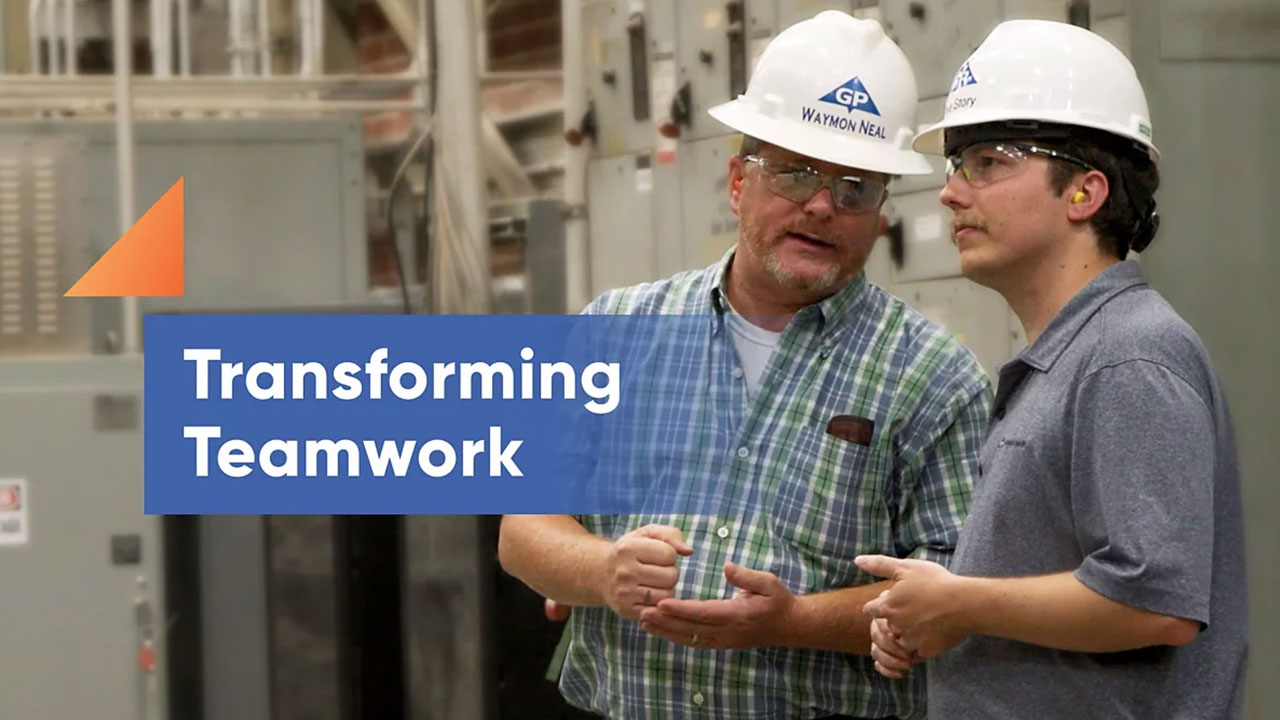
Transforming Teamwork
See how a culture change reenergized Georgia-Pacific’s Brewton mill.

What Principle Are You Striving To Apply?
Watch leaders answer a question we all should consider: What principle are you working to better apply?

Why We Don’t Want a Rules-Based Approach
Why take a principle-based approach? This video explores problems and limitations with a rule-based approach.
Examples
Below are examples of employees reflecting on a time when they felt empowered. Notice in each example how a combination of growing responsibility paired with support and accountability helped individuals improve.
- Learning Something New
- Removing Barriers
- Overcoming Internal Barriers
- Improving
- Growing
I’ll admit that I was nervous when it was suggested I learn how to use the robot to weld. Fortunately, Tim gave me helpful feedback, so I knew exactly what I was doing right and wrong. He also showed me how my welding experience could be applied to robotic welding. Within a few days of working with Tim, I had a clear understanding of expectations and got the support I needed to meet them.
When my dad had a long illness, I began struggling to meet deadlines. Fortunately, my supervisor helped me take full advantage of company benefits and temporarily adjusted my RREs. She still had high expectations, but she shifted me to projects that had longer timelines. This allowed me to have some weeks where I worked a normal schedule and some weeks where I could take time to help my dad, providing me the opportunity to contribute to project milestones.
After Lee and I recommended a new way to display our system dashboard, Franny encouraged us to get feedback from the area leader and other operators. She realized how nervous I was about it, so she helped me prepare so I could confidently and effectively explain it. I still can’t believe my idea got such a great response. Without Franny, I’m not sure I would have even tried. I feel a sense of pride when someone spots an issue based on the new dashboard.
I’m grateful Hank had the courage to tell me that I can sometimes come across as defensive or dismissive. He said this could hold me back from opportunities to contribute since so much of our work involves collaboration. Hank didn’t stop there; he helped me reflect and realize that I act that way when I'm under stress. Now he gives me quick feedback after meetings so I can track my progress. I can actually sense that people are more comfortable working with me now.
I worked with Lindsay on a few projects and admired how well she managed complex tasks. I wasn’t sure I was ready to take on that kind of responsibility myself, but Lindsay encouraged me and suggested I lead our next project while she supported me behind the scenes. I made a few mistakes along the way, but Lindsay helped me learn from them. I’m excited about the next project!
Discover Our Stories
Connection to the Five Dimensions
The Empowerment principle is highlighted in the Vision dimension because it encourages employees to more fully develop and use their knowledge and talents to maximize their contributions.
Give It a Try
The power of these principles happens through application. There’s no substitute for learning as you apply.
- Ask your supervisor or teammates for examples of when a barrier was removed, and it resulted in someone using their talents to contribute more. Use this as inspiration to remove a barrier for someone else or to ask for help getting a barrier removed.
- Think about a time you felt empowered to contribute while you were still learning. What allowed that to happen?
- Think about the times you supported someone and held them accountable in a way that helped them grow. What specifically did you do?
- Consider where you might need more support or accountability. Work with your supervisor, mentors or teammates to figure out what you need.
- Reflect on how you react to failure. Do you tend to feel more empowered, entitled or helpless? Ask someone you trust what they think.
- How is empowerment different from simply giving someone authority or freedom to do what they like or want to do?
- How is empowerment different from making it easy for someone (such as doing it for them or giving it to them)?
- What are some signs that someone is feeling empowered vs. feeling helpless? entitled?
- What are some internal barriers that prevent someone from being empowered? What are some external barriers?
- Are there any external barriers our team faces? How can we work to remove them?
- How can we apply this principle when our team experiences failure?
SHARE: